


Something kept coming up during our outreach to European growers and buyers this year.
When chefs and restaurant buyers talked about substrate, the question was never about yield. It was about what happens after the tray leaves the kitchen. Can they throw it away without guilt? Is it biodegradable? Is it clean enough to sit on a restaurant pass for two weeks without becoming a problem?
That is not a sustainability preference. That is a purchasing criterion. And it tells you a lot about where the European microgreens market is right now.
Across Europe, a growing number of buyers are not just purchasing microgreens. They are purchasing a product that travels with its substrate from your farm to their counter. What it looks like when it gets there, how it behaves, and what happens when it is finished- these are all part of the decision.
Local production is what makes that product viable. Not as a marketing message. As an operational fact.
What European buyers actually mean by local
Europe holds the largest share of the global microgreens market. The demand is established and growing. But the buyers have become more specific about what they need.
A few years ago, local was a story. It got you in the door. In 2026, it is an operational requirement that professional buyers are verifying, not just appreciating.
Here is why. Microgreens have a structural freshness constraint that does not get talked about enough. From the moment of harvest, you are working against a 7 to 10 day window. For cut product in a clamshell, that clock starts the moment the knife goes in. For live product sold roots-intact, you have more runway, but only if the delivery chain is short enough to use it.
Institutional buyers across European markets report rejecting up to 20% of microgreen orders due to freshness concerns on arrival. Transit and retail waste rates in longer supply chains reach up to 30%. Those numbers are not edge cases. They are what happens when the logistics chain is too long for the product.
A buyer who rejects a delivery once will not call again. The European B2B microgreens market runs on repeat orders and long-term relationships. Losing an account over a freshness issue does not just cost you that week. It costs you the account.
Short delivery chains are how you avoid that. Not a competitive edge. A prerequisite.

The live tray format makes this even more unforgiving
In North America, the dominant format is cut microgreens in a clamshell. The substrate stays on the farm. The buyer receives a finished product.
Across European retail, the live tray format is growing. The product is sold roots-intact in the substrate. The consumer takes it home, cuts what they need, and the plant keeps growing. It is most visible in markets like Italy, the UK and the Netherlands.
This format extends freshness. But only if the logistics chain is short enough.

A live tray that has spent three days in refrigerated distribution arrives on the shelf already a third of the way through its viable life. One delivered the same day arrives intact. No packaging innovation or cold chain upgrade changes this. The biology does not negotiate.
But the delivery window is only part of the problem. The substrate is the other part.
In cut production, the substrate stays on your farm. No one ever sees it. In live tray production, the substrate goes with the product. It sits on the supermarket shelf. It goes home with the consumer. It sits on a kitchen counter or restaurant pass for up to two weeks while people cut from it.
Soil sheds particles when the tray is moved. Coco coir can dry unevenly, creating visible patches. The wrong substrate shortens the window the plant stays viable after harvest and creates the kind of mess that restaurant buyers notice immediately. For home consumers, a live tray can stay in use for days to a week or more. For a restaurant pass, it needs to look clean and professional for every service it sits through.
This is exactly what European buyers kept raising with us. Not delivery times. What happens to the tray once it gets there. Whether the substrate stays clean, contained, and professional for the full time the product is in use. Whether the whole thing can go in the compost when it is done.
That is the local-first requirement in its full form. Not just a short delivery chain. A product that holds up after it arrives, in a substrate that belongs in a professional kitchen environment.
Food safety is making this more urgent
In May 2026, three separate microgreens recalls were issued in Canada within two weeks. Six product lines across multiple brands were pulled from shelves due to possible pathogenic E. coli contamination. No illnesses were reported. The recalls were triggered by the companies themselves through proactive testing.
But three recalls in two weeks is a signal. Food safety scrutiny in this category is growing. European buyers, who already operate under stricter food safety regulations than North America, are asking harder questions about substrate cleanliness and contamination risk than they were two years ago.
For live tray producers, the stakes are higher than for cut product suppliers. When the substrate travels with the product to the consumer's kitchen, contamination risk is not contained within your operation. It goes with the tray.
HORECA and retail buyers in Europe are beginning to ask about substrate sourcing and hygiene as part of supplier qualification. Not universally yet. But the direction is clear. The growers who have made this a deliberate choice will be ahead of that conversation when it becomes standard.
Why we set up a hub in Europe
This is the context behind Vegbed's decision to establish a European hub.
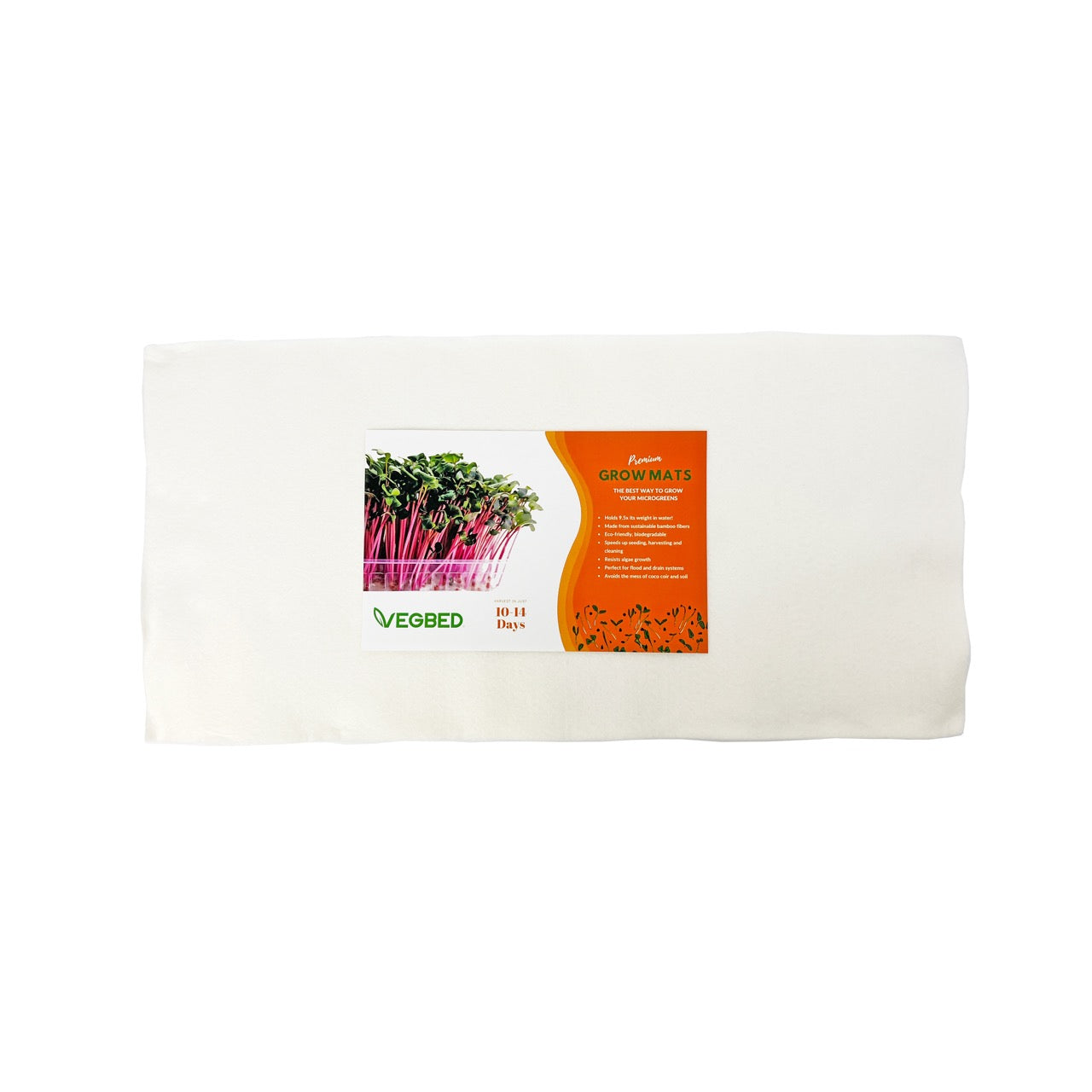
The conversations we were having with European buyers kept coming back to the same gap. They wanted a substrate that was biodegradable, clean, and hygienic. And they wanted it available locally, without waiting weeks for a shipment from the US and without the logistics costs that make international substrate sourcing impractical when you are running on weekly supply cycles.
A European hub means growers can source Vegbed mats locally, with short lead times. It closes the last gap in the local-first story. Short delivery chains to your buyers. Short supply chain for your substrate. An end-to-end local operation that your buyers can actually verify.
The feedback from growers who have run trials with Vegbed mats in live tray production has been consistent. Clean germination. No shedding or particle contamination. A substrate that holds together from harvest to the consumer's counter without creating the kind of mess that compromises presentation.
The mats are 99% pathogen-free, with no significant fungal or eukaryotic presence detected and zero concerning bacterial growth, including E. coli, Salmonella and Listeria monocytogenes. They are food-grade safe, certified Oeko-Tex 100 and FDA CFR 21 177.1850 compliant. For live tray producers selling into European retail and HORECA, those are not small details. They are the credentials buyers are starting to ask for.

And when the buyer asks whether the tray is biodegradable, the answer is yes.
That matters. Not because it is a nice story to tell. Because in the European market in 2026, it is the answer buyers are already expecting.
Three things worth keeping in mind
Know your delivery radius.
The freshness window is not a logistics problem you solve with better cold chain management. You solve it by keeping your buyers close. Define your delivery boundary clearly and build your customer base within it. For live tray producers, that radius is tighter than for cut product. That is not a limitation. It is how the product works.
Your substrate is now part of the buyer conversation.
European HORECA and retail buyers are asking about substrate cleanliness, biodegradability and hygiene during supplier qualification. If your growing medium is coco coir, soil or rockwool, be ready to answer questions about mess, microplastics and disposal. If it is clean, contained and biodegradable, that is worth leading with.
And if you are newer to the food safety side of things, we have a practical guide that walks through the basics from seed sourcing to post-harvest handling.
Local substrate sourcing closes the loop.
If your substrate is arriving from the other side of the world, you have a long-chain dependency sitting in the middle of an otherwise local operation. European buyers with supply chain transparency requirements are starting to ask about this. Sourcing substrate locally gives you a cleaner, more consistent answer.
The European microgreens market in 2026 is not complicated. It rewards growers who are close to their buyers, consistent in their supply, and deliberate about every part of their product, including what it grows in.
Harvested locally used to open doors. Now it keeps you in the room. And for growers selling live trays, the substrate that travels with your product is as much a part of that promise as the delivery time.
If you’re currently building or scaling a live tray operation in Europe and want to test our bamboo mats in your setup, feel free to drop us a message through our website. We’d love to connect.