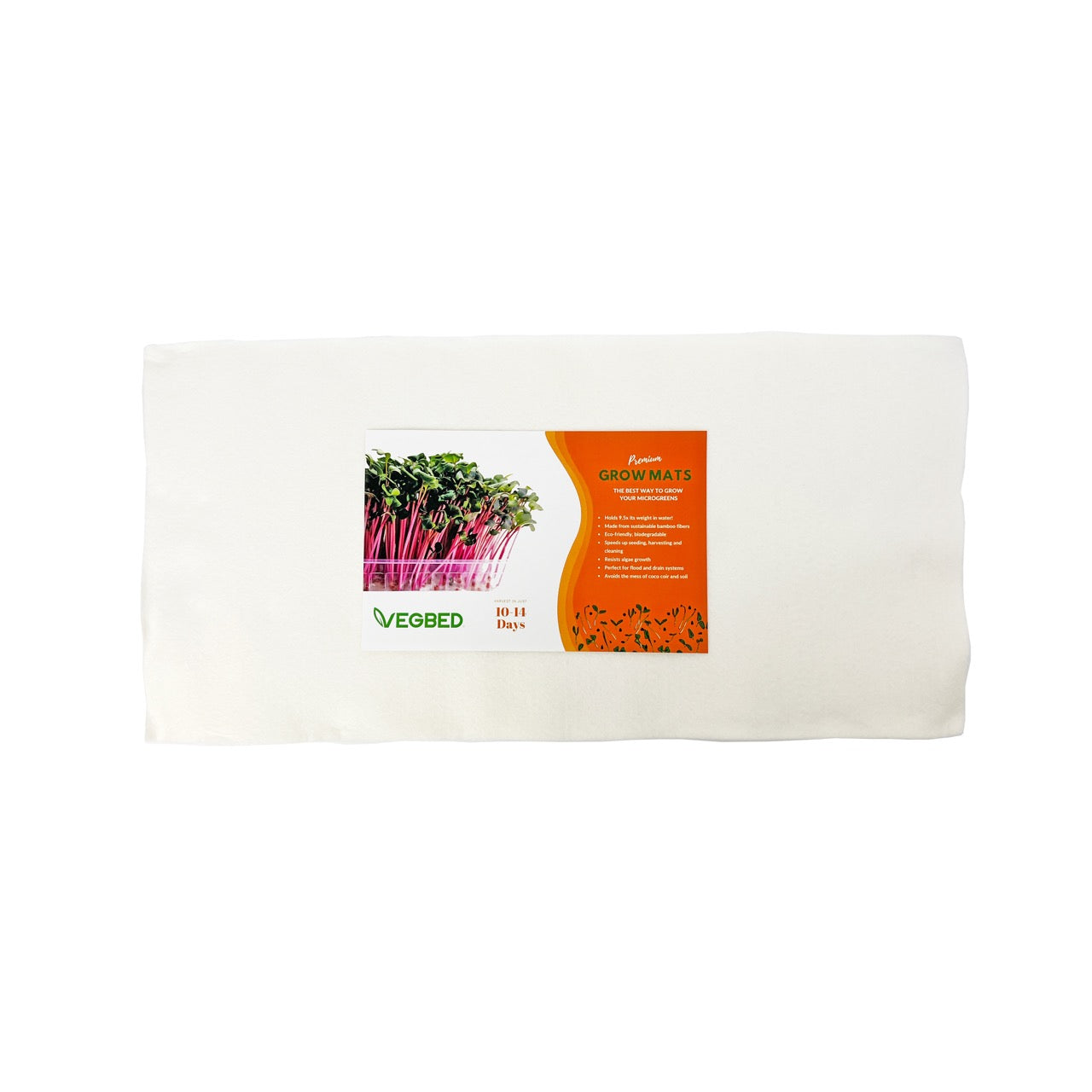



Vegbed bamboo grow mats have become a go-to medium for microgreen growers. They hold moisture well, stay clean, and break down naturally when the grow is done.
But the material itself does not know it is supposed to stay flat.
What you might not have considered is what happens when you roll that same mat into a plug. The same properties that make it work in a flat tray make it worth trying as one.
This Is Not a New Concept
Plugs are a standard part of hydroponic growing. Tower farms, NFT channels, Flood and Drain systems, and even a jar on your kitchen counter.
The process is the same regardless of your setup. You start your seedling in a plug, let it establish its root system, and transfer it into your system when it is ready. The plug sits in a net cup and holds the plant in place while the roots reach down into the water or nutrient solution below.
Most growers use rockwool, peat plugs, or plastic foam for this. They work. But they come with real trade-offs.
Rockwool is made from spun volcanic rock. It is a skin irritant, non-biodegradable, and has no place in a compost bin when you are done with it.
Peat and coco coir break apart over time, sending loose debris into your pumps and filters.
Plastic foam plugs introduce microplastics into your water reservoir. None of these are deal-breakers for most growers, but they are worth thinking about when a cleaner option exists.
Vegbed mats are pathogen-free, made from bamboo fiber, and stay intact throughout the grow cycle. No debris. No irritants. Nothing synthetic breaks down into your water. When the grow is done, the mat composts naturally.
We have already covered how Vegbed mats perform across popular home microgreens systems, in case you want to see the material in action before trying it as a plug.
How to Use a Vegbed Mat as a Plug
The process is straightforward. Here is exactly how to do it.
Step 1. Cut a strip of your Vegbed mat to match the depth of your net cup.

Step 2. Roll it firmly into a cylinder shape. The bamboo fiber holds together well without needing to be secured.

Step 3. Place the rolled mat into the net cup so it sits snugly, with no gaps on the sides.

Step 4. Mist the rolled mat until it is evenly moist.

Step 5. The rolled mat is now ready for your seeds or seedlings.

Step 6. Place the net cup in your system and let your roots grow down into the nutrient solution.

It’s the same reliable material you trust for microgreens, now working for your larger plants. You’ve given your seedlings a pathogen-free, eco-friendly start without the mess of traditional plugs. Now, all you need to do is wait for the harvest time.
A Few Things Worth Knowing
The mat works best in low-sided net cups where the roots have room to push through the bottom and sides of the material. Bamboo fiber is not as dense as rockwool, so roots find their way through it naturally without much resistance.
And because the mat holds its shape simply by being rolled, there is no glue or binders needed. What goes into your net cup is pure bamboo fiber and nothing else. That makes it one of the cleanest growing mediums available for hydroponic growers today.
If you are bottom-watering or using a flood-and-drain system, the mat's wicking properties work in your favor. The fiber draws moisture up consistently, keeping the root zone hydrated without sitting in standing water.
One thing to keep in mind: if your system uses liquid nutrients, apply them the same way you would with any inert medium. The mat itself adds nothing to and takes nothing from your nutrient solution. It is a neutral carrier, which means what your plants get is exactly what you put in.
For a closer look at how Vegbed mats handle different indoor growing setups, our post on AeroGarden alternatives covers some real-world examples worth reading.
The Bigger Picture
The same mat you use for microgreens is the same mat you could roll into a plug. Same material, same properties, different shape. That is the practical case for keeping Vegbed in your growing toolkit regardless of what system you are running.
If you try it in your setup, we want to hear how it goes. Tell us what worked and what you would do differently. Every grower's experience helps us understand where the mat performs best. Pick up your mats and share your results at vegbed.com.